
Navigating Your Golden Years: A 2026 Guide to Retirement Planning with Precious Metals
Securing your financial future in an ever-changing economic landscape is a top priority for many retirement savers. Retirement planning with precious metals has emerged as a compelling strategy, offering a tangible hedge against volatility and inflation. This comprehensive 2026 guide will explore the intricacies of incorporating physical precious metals into your retirement portfolio, drawing on current market insights and expert recommendations.
What Defines “Retirement Planning with Precious Metals”?
At its core, “Retirement Planning with Precious Metals” refers to the strategic inclusion of physical gold, silver, platinum, or palladium bullion in a self-directed retirement account, such as a Precious Metals IRA. Unlike traditional 401(k)s and IRAs, which primarily hold paper assets like stocks, bonds, and mutual funds, a Precious Metals IRA allows for direct ownership of tangible metals. This provides a distinct advantage for investors who prefer a physical asset that isn't subject to the same counterparty risks as paper investments.
Why Consider Precious Metals for Your 2026 Retirement Plan?
The reasons for incorporating precious metals into a retirement strategy are multifaceted and resonate particularly strongly in the current economic climate:
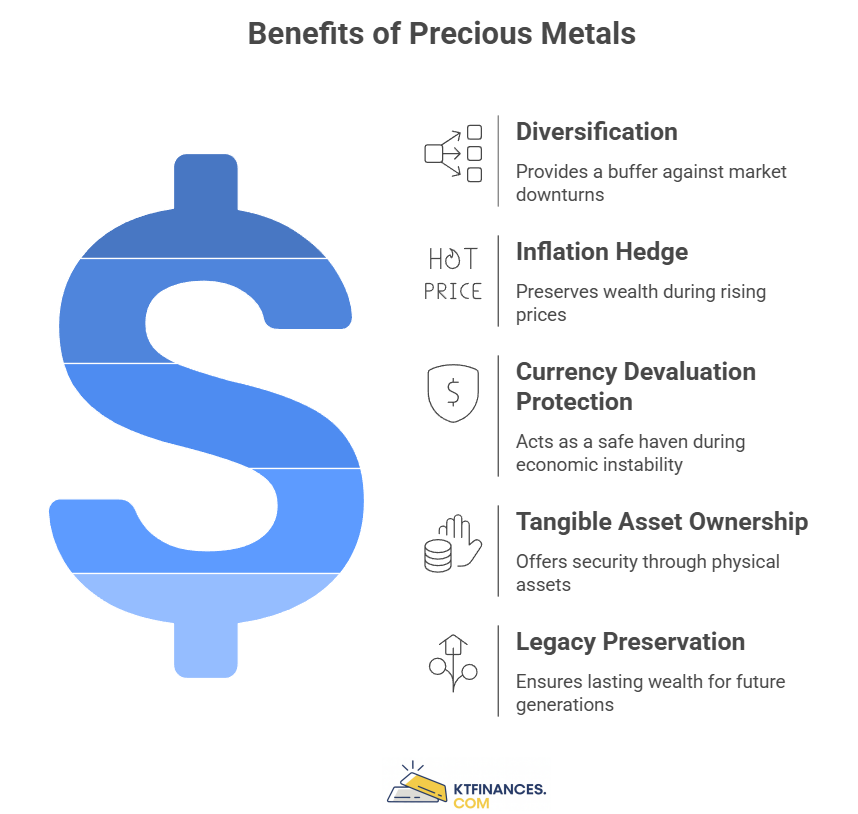
- Diversification: Precious metals often exhibit a low or inverse correlation with traditional assets like stocks and bonds. This means that when the stock market experiences a downturn, precious metals may hold their value or even appreciate, providing a crucial buffer for your portfolio.
- Inflation Hedge: Gold and silver have historically served as effective hedges against inflation. As the purchasing power of fiat currencies declines due to rising prices, the value of precious metals tends to increase, preserving your wealth.
- Protection Against Currency Devaluation: In times of economic instability or when a nation's currency weakens, investors often turn to precious metals as a safe haven. Their intrinsic value is not tied to the performance of any single government or financial institution.
- Tangible Asset Ownership: For many, the ability to own a physical, tangible asset provides a greater sense of security and peace of mind compared to purely digital or paper investments.
- Legacy Preservation: Physical precious metals can be a durable form of wealth to pass down to future generations, offering a lasting legacy.
The Foundation: History, Regulations, and Compliance
The integration of precious metals into mainstream retirement planning is a relatively recent development, guided by specific legislative and regulatory frameworks.
A Brief History: Precious Metals in Retirement Accounts
While the concept of owning gold and silver dates back millennia, their inclusion in U.S. retirement accounts began with the Taxpayer Relief Act of 1997. This landmark legislation made it possible for individuals to hold certain types of physical gold, silver, platinum, and palladium bullion within self-directed IRAs. Before this, investors largely held physical metals outside tax-advantaged accounts, limiting their potential for tax-deferred growth. The 1997 Act recognized the role of tangible metals in wealth preservation and opened new avenues for diversified retirement strategies.
Navigating IRS Rules and Ensuring Compliance
To maintain the tax-advantaged status of a Precious Metals IRA, strict adherence to Internal Revenue Service (IRS) regulations is paramount. Key rules include:
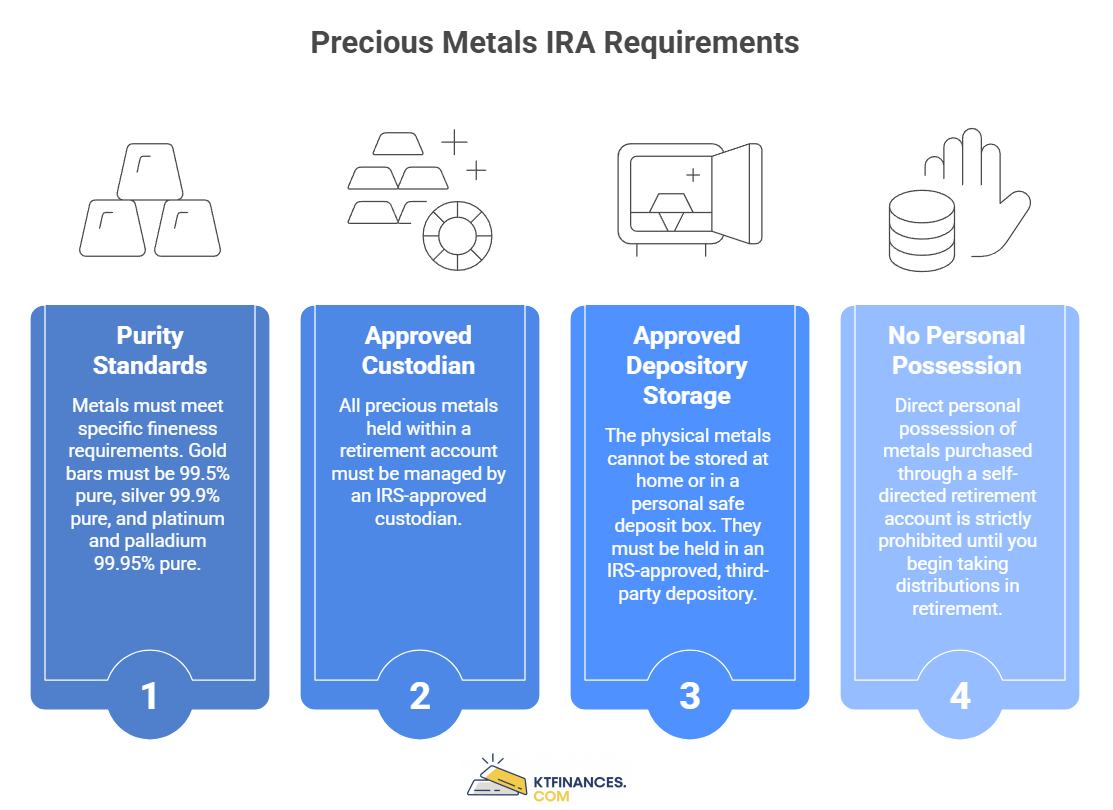
- Purity Standards: Metals must meet specific fineness requirements. For example, gold bars must be 99.5% pure, silver 99.9% pure, and platinum and palladium 99.95% pure. Certain government-minted coins, like American Gold Eagles, are also approved even if their purity is slightly lower due to alloy content.
- Approved Custodian: All precious metals held within a retirement account must be managed by an IRS-approved custodian. This custodian is responsible for facilitating purchases, transfers, and ensuring proper storage.
- Approved Depository Storage: The physical metals cannot be stored at home or in a personal safe deposit box. They must be held in an IRS-approved, third-party depository. This ensures security and prevents self-dealing, which could lead to severe penalties.
- No Personal Possession: Direct personal possession of metals purchased through a self-directed retirement account is strictly prohibited until you begin taking distributions in retirement. Violating this rule can result in the disqualification of your account and significant tax penalties.
Working with experienced custodians and dealers who are well-versed in these regulations is essential to safeguard your retirement savings and avoid costly compliance errors.
Benefits of Diversifying Your 2026 Retirement Portfolio with Precious Metals
For retirement savers planning for 2026 and beyond, the benefits of incorporating precious metals into their strategy are compelling.
Stability During Market Volatility
One of the most attractive features of precious metals is their historical tendency to provide stability during periods of stock market turmoil. Unlike equities, which can experience sharp declines, gold and silver often act as safe-haven assets, retaining or even increasing in value when other markets falter. This inverse relationship can significantly cushion your retirement portfolio against downturns, offering peace of mind to those who have witnessed the unpredictable nature of financial markets.
A Robust Hedge Against Inflation and Currency Risk
Inflation is a silent wealth destroyer, eroding the purchasing power of your savings over time. Many retirees worry that their carefully accumulated nest egg will diminish in real value due to rising costs. Precious metals, being finite resources, have historically demonstrated their ability to maintain value during inflationary periods. As the U.S. dollar or other fiat currencies weaken, the value of gold and silver often climbs, offering a crucial defense against the erosion of wealth. By holding physical metals, you are diversifying beyond paper assets and potentially insulating your savings from currency depreciation.
Preserving Wealth for Future Generations
For individuals focused on leaving a lasting legacy, precious metals offer a tangible and enduring form of wealth. Physical gold and silver can be passed down through generations, symbolizing stability and heritage in a way that many paper assets cannot. This aspect resonates with many investors who wish to provide a secure financial foundation for their heirs. Moreover, the inherent security of a diversified retirement strategy, bolstered by precious metals, can significantly reduce financial stress, allowing you to enjoy your retirement years with greater confidence and focus on what truly matters.
Your Step-by-Step Roadmap to a Precious Metals IRA
Establishing a Precious Metals IRA might seem complex, but by breaking it down into manageable steps, the process becomes clear and achievable.
1. Research and Education
Before committing, dedicate time to learning about precious metals and self-directed retirement accounts. Understand the specific IRS-approved metals, the mechanics of secure storage, and the long-term implications for your overall retirement strategy.
2. Select an IRS-Approved Custodian
The custodian is central to your Precious Metals IRA. Choose an IRS-approved custodian with proven experience in handling precious metals. Look for transparency in fees, robust security protocols for storage, and overwhelmingly positive customer reviews. It's advisable to interview several providers to compare their services and ensure they meet your specific needs.
3. Open and Fund Your Account
Complete the necessary paperwork to open your self-directed Precious Metals IRA. You can fund it through various methods:
* Direct Contribution: Make annual contributions, subject to IRS limits.
* Rollover: Transfer funds from an existing 401(k), 403(b), TSP, or other qualified retirement plan.
* Transfer: Move funds from an existing IRA (Roth or Traditional).
Ensure all funding methods comply with IRS regulations to avoid penalties. Your chosen custodian will guide you through this process.
4. Choose a Reputable Precious Metals Dealer
Partner with a trusted and transparent precious metals dealer. Well-regarded options often include companies like GoldenCrest Metals, Augusta Precious Metals, Colonial Metals Group, Noble Gold Investments, Lear Capital, and Birch Gold Group. Verify their credentials, check their ratings with organizations like the Better Business Bureau, and review customer testimonials.
5. Purchase IRS-Approved Metals
Work collaboratively with your dealer and custodian to select and purchase IRS-approved coins or bars. Consider diversifying your holdings across different metals such as gold, silver, platinum, and palladium, based on your investment goals and risk tolerance. Ensure that the metals meet the required purity standards.
6. Arrange Secure Depository Storage
Once purchased, your metals must be shipped directly to and stored in an IRS-approved depository. You'll typically have two storage options:
* Segregated Storage: Your specific metals are kept separate from those of other investors. This usually comes with a higher fee but offers greater peace of mind.
* Commingled Storage: Your metals are stored alongside those of other investors, with ownership tracked by the depository. This is generally more cost-effective.
Both options provide secure, insured storage until you are ready to take distributions.
7. Regular Review and Rebalancing
Monitor your holdings periodically. Market conditions, economic forecasts, and your personal financial situation can change. You may need to adjust the proportion of precious metals within your overall portfolio to align with your evolving retirement goals and risk profile.
Custodians, Dealers, and Storage: Making the Right Choices
The success of your Precious Metals IRA hinges on selecting reliable partners.
Eligibility and Account Types
Most Precious Metals IRAs are set up as Self-Directed IRAs (SDIRAs). This type of IRA allows you to invest in a broader range of assets, including precious metals, real estate, and private equity, compared to traditional IRAs. You'll need to choose an SDIRA custodian specializing in alternative assets. These custodians are distinct from conventional financial advisors, who may not be familiar with the specifics of physical metals.
How to Select Your Precious Metals Dealer and Custodian
Choosing the right partners is paramount. Here's what to look for:
| Feature | What to Look For |
| Reputation & Track Record | Long-standing history, positive reviews on independent platforms (e.g., BBB, Trustpilot), and industry recognition. |
| Transparent Fees | Clear breakdown of all costs: setup fees, annual administrative fees, storage fees, and transaction fees. Avoid companies with hidden charges. |
| Customer Service | Responsive, knowledgeable staff who can answer your questions clearly and guide you through the process. |
| Product Range | Offers a variety of IRS-approved gold, silver, platinum, and palladium products. |
| Security & Insurance | For custodians: Details on depository security, insurance coverage for your metals, and independent audits. For dealers: Insured shipping. |
| Educational Resources | Provides valuable information to help you understand the market and make informed decisions. |
| Buyback Programs | If you plan to sell your metals in the future, inquire about their buyback policy and pricing. |
Reputable companies often cited by consumers include GoldenCrest Metals, Augusta Precious Metals, Noble Gold. It's wise to contact several of these firms, compare their offerings, and read independent consumer feedback before making a decision.
Funding Your Account and Purchasing Metals
Once your SDIRA is established with a custodian, you can fund it via eligible rollovers from existing retirement accounts (e.g., 401k to IRA rollover) or direct contributions, always adhering to IRS limits. Your custodian will then work with your chosen dealer to facilitate the purchase of IRS-approved metals. This typically involves:
- You instruct your custodian to release funds to the dealer.
- The dealer sells you the selected metals.
- The dealer ships the metals directly to the approved depository.
Remember to factor in shipping and storage fees when calculating your total investment. A diligent custodian will help you navigate these financial details and avoid potential pitfalls.
Secure Storage and Insurance Options
Proper storage is the cornerstone of a secure Precious Metals IRA. As mandated by the IRS, your metals must be held in an approved third-party depository. These highly secure facilities offer protection against theft and damage.
- Segregated Storage: Your specific bullion bars or coins are kept separate from those of other clients. This offers absolute assurance that you will receive the exact metals you purchased.
- Commingled Storage: Your metals are stored alongside identical metals owned by other clients, with your ownership tracked by ledger. This is often a more cost-effective option.
Regardless of the choice, your metals remain in secure, insured facilities until you initiate distributions.
Insurance is another critical consideration. Approved depositories carry comprehensive insurance policies that protect against loss, theft, or damage. However, coverage limits and terms can vary. Always review your custodian's and depository's insurance policies in detail. For high-value accounts, some investors may choose to acquire supplemental insurance for added peace of mind. Knowing your metals are fully protected helps you rest easier, especially in turbulent economic times.
Precious Metals IRAs vs. Other Retirement Options
When planning for retirement in 2026, it's beneficial to compare Precious Metals IRAs with other common retirement savings strategies. Many investors also explore options like general retirement planning, diversifying retirement portfolios with various assets, traditional gold retirement plans (which might include gold stocks or ETFs), and direct buying gold for retirement (outside an IRA).
Key Differences to Consider:
| Feature | Precious Metals IRA | Traditional IRA/401(k) | Mining Stocks/ETFs | Direct Gold Ownership (Non-IRA) |
| Asset Type | Physical, IRS-approved gold, silver, platinum, palladium | Stocks, bonds, mutual funds, ETFs | Shares of mining companies or gold-backed ETFs | Physical gold/silver held personally |
| Ownership | Direct ownership of physical metals, stored by custodian | Indirect ownership of company shares or fund units | Indirect ownership of company/commodity via shares | Direct personal possession of physical metals |
| Tax Treatment | Tax-deferred growth (Traditional IRA); tax-free growth (Roth IRA) | Tax-deferred/tax-free growth (Traditional/Roth) | Capital gains tax upon sale; dividends taxable | Capital gains tax upon sale (collectibles tax if applicable) |
| Liquidity | Moderate; involves custodian and dealer to sell | High; easily bought/sold on exchanges | High; easily bought/sold on exchanges | High; can be sold to dealers, pawn shops |
| Counterparty Risk | Low; direct physical asset ownership | Present with financial institutions, fund managers | Present with company performance, fund management | None (if held personally) |
| Storage | Required in IRS-approved depository | Not applicable (digital assets) | Not applicable (digital assets) | Personal storage (home safe, safe deposit box) |
| Fees | Setup, annual admin, storage, transaction fees | Management fees, expense ratios, trading commissions | Brokerage fees | None, or safe deposit box fees |
Ultimately, the best approach for your 2026 retirement plan depends on your financial goals, risk tolerance, and personal preferences. Many savvy investors choose a blended approach, combining a Precious Metals IRA with other diversified assets to create a well-rounded and resilient portfolio.
The Upsides and Downsides: A Balanced Perspective
Like any investment strategy, a Precious Metals IRA comes with its own set of advantages and disadvantages.
Pros of a Precious Metals IRA:
- Diversification: Offers a non-correlated asset class that can reduce overall portfolio risk.
- Inflation Hedge: Protects purchasing power during periods of rising prices.
- Crisis Hedge: Historically performs well during economic downturns and geopolitical instability.
- Tangible Asset: Provides the security of owning aphysical asset, not just a paper promise.
- Legacy Building: A tangible form of wealth that can be passed down through generations.
- Tax Advantages: Benefits from the tax-deferred or tax-free growth of an IRA structure.
Cons of a Precious Metals IRA:
- Higher Fees: Incurs additional costs for setup, annual administration, and secure depository storage, which can be higher than traditional IRA fees.
- Limited Growth Potential: While precious metals offer stability, their appreciation may not always match the growth potential of a strong bull stock market.
- Less Liquidity: Converting physical metals back into cash can take slightly longer than selling stocks or mutual funds, as it involves coordinating with your custodian and dealer.
- No Income Generation: Unlike stocks (dividends) or bonds (interest), physical precious metals do not generate income.
- IRS Compliance: Requires strict adherence to IRS rules regarding purity, storage, and custodianship, with severe penalties for non-compliance.
- Not for Everyone: Its suitability depends heavily on individual financial goals, risk tolerance, and time horizon.
Common Mistakes to Avoid:
To ensure a smooth and successful Precious Metals IRA experience, be vigilant against these common pitfalls:
- Neglecting Due Diligence: Failing to thoroughly research and vet custodians, dealers, and depositories can lead to inflated fees, poor service, or even fraud. Always check independent reviews and regulatory standings.
- Improper Storage: Attempting to store IRA-purchased metals at home or in an unapproved facility is an IRS violation that can lead to account disqualification, taxes, and penalties.
- Over-Concentration: Allocating an excessively large portion of your retirement savings solely to precious metals can introduce unnecessary risk. Diversification across multiple asset classes remains crucial.
- Ignoring Fees: Overlooking or underestimating the impact of setup, administrative, storage, and transaction fees can significantly diminish your returns over time. Always get a clear breakdown of all costs.
- Falling for Scams: Be wary of high-pressure sales tactics, guarantees of exorbitant returns, or claims that sound too good to be true. Stick to reputable, established firms.
- Not Understanding Tax Implications: While IRAs offer tax advantages, rules around rollovers, contributions, and distributions must be followed carefully. Consult a tax professional.
By being mindful of these potential missteps, you can protect your savings and maximize the benefits of incorporating precious metals into your 2026 retirement plan.
Expert Insights and Community Perspectives
Gaining a well-rounded understanding involves listening to both industry experts and the experiences of fellow investors.
Key Expert Takeaways for 2026:
Experts in the precious metals industry consistently emphasize several critical points for those considering this investment:
- Education is Paramount: A deep understanding of how Precious Metals IRAs work, including IRS rules, market dynamics, and associated costs, is essential before investing.
- Work with Reputable Partners: The integrity of your custodian and dealer directly impacts the security and compliance of your investment. Prioritize firms with strong track records and positive consumer reviews.
- Strategic Allocation: Precious metals are best viewed as a component of a diversified portfolio, not a standalone solution. Determine an allocation that aligns with your risk tolerance and overall financial strategy.
- Stay Informed: Keep abreast of global economic trends, central bank policies, and geopolitical events that can influence precious metal prices.
- Long-Term Horizon: Precious metals are typically a long-term investment for wealth preservation, not a get-rich-quick scheme. Patience and a long-term perspective are key.
Insights from Online Communities: Reddit and Quora
Online forums like Reddit and Quora offer invaluable, unfiltered perspectives from individuals navigating their own retirement planning journeys with precious metals. These communities serve as informal hubs for sharing first-hand experiences, candid reviews, and practical advice.
Common themes frequently discussed include:
- Custodial Experiences: Users often share detailed accounts of their interactions with various custodians, highlighting both positive customer service experiences and areas for improvement. This helps new investors gauge reliability and responsiveness.
- Dealer Comparisons: Discussions frequently compare the pricing, product selection, and customer support of prominent dealers such as GoldenCrest Metals, Colonial Metals Group, Noble Gold Investments, Lear Capital, and Birch Gold Group. These discussions can offer practical tips for negotiating prices or identifying the best deals.
- Storage Considerations: Many threads delve into the pros and cons of segregated versus commingled storage, as well as the security measures of different depositories. Investors share their peace of mind (or concerns) regarding the physical security of their assets.
- Rollover Processes: The intricacies of rolling over funds from a 401(k) or traditional IRA into a Precious Metals IRA are a frequent topic, with users offering step-by-step guidance and warnings about potential bureaucratic hurdles.
- Market Sentiment: These forums often reflect broader investor sentiment, with discussions touching on fears of inflation, currency devaluation, and global economic instability, underscoring why many turn to precious metals as a hedge.
While these online discussions provide a wealth of real-world insights, it's crucial to remember that individual experiences vary. Use these forums as a starting point for research and to formulate smarter questions for financial professionals, rather than as definitive financial advice.
Alternative Companies and Products to Consider for 2026
While a Precious Metals IRA focusing on gold and silver is a popular choice, the landscape of alternative investments for retirement is broader. Exploring other companies and products can help you fine-tune your diversification strategy for 2026.
Leading Precious Metals Firms Beyond the IRA Structure
The companies often mentioned for Precious Metals IRAs – GoldenCrest Metals, Colonial Metals Group, Noble Gold Investments, Lear Capital, and Birch Gold Group – also offer services for direct purchases of precious metals outside of retirement accounts. Each firm may have distinct strengths:
- GoldenCrest Metals: Often praised for its customer-centric approach, transparent pricing, and educational resources.
- Colonial Metals Group: May offer a diverse selection of coins and bars with competitive pricing.
- Noble Gold Investments: Known for its ethical sourcing practices and strong customer support.
- Lear Capital: Provides a wide range of precious metal products and robust educational materials for investors.
- Birch Gold Group: Emphasizes flexibility and personalized customer service, guiding clients through the entire process.
It’s always recommended to contact multiple providers to compare quotes, fees, and service offerings to find the best fit for your specific needs, whether for an IRA or direct purchase.
Expanding Your Horizon: Other Precious Metals and Investment Vehicles
Beyond gold and silver, you might consider diversifying into:
- Platinum and Palladium: These industrial precious metals are also IRS-approved for IRAs and can offer additional diversification, as their value is often influenced by different market dynamics (e.g., automotive industry demand for catalytic converters).
- Precious Metals ETFs (Exchange-Traded Funds): These funds track the price of physical precious metals but are paper assets. They offer liquidity and ease of trading but do not provide direct ownership of physical metals and thus carry counterparty risk.
- Mining Stocks: Investing in the stocks of companies that mine gold, silver, or other precious metals can offer leverage to metal prices, but also introduces company-specific risks (management, production costs, geopolitical factors).
- Collectible Coins: While some collectible coins (e.g., specific rare numismatics) are not allowed in IRAs, others, particularly certain government-minted bullion coins, are. These can carry premiums above their metal content, reflecting their rarity or artistic value.
Remember, diversification is a cornerstone of sound investment strategy. Mixing different types of precious metals or combining physical holdings with other retirement vehicles can enhance the resilience and stability of your overall portfolio. The ultimate goal is to create a balanced, robust strategy that aligns with your personal objectives for 2026 and beyond.
Frequently Asked Questions (FAQ)
To help clarify common queries, here are answers to frequently asked questions about retirement planning with precious metals.
What are the basic steps to open a Precious Metals IRA?
Opening a Precious Metals IRA involves selecting a self-directed IRA custodian, funding the account (via rollover or contribution), choosing a reputable precious metals dealer, purchasing IRS-approved metals, and arranging for secure storage at an approved depository. Always work closely with experts to ensure compliance.
Are there taxes or penalties when transferring funds to a Precious Metals IRA?
Transferring funds from one retirement account (like a 401k) to a Precious Metals IRA can be tax-free and penalty-free if done correctly as a direct rollover or trustee-to-trustee transfer. However, incorrect procedures (e.g., an indirect rollover that exceeds the 60-day limit) can trigger taxes and penalties. Consult a tax professional for personalized guidance.
How do storage fees work in a Precious Metals IRA?
Storage fees typically vary by custodian and depository, often based on the value or weight of your metals. These are usually annual fees. Some depositories offer both segregated (your specific metals kept separate) and commingled (your metals stored with others') storage options, with segregated often costing more. Compare options to find competitive pricing and suitable security.
Can I hold the metals myself in a Precious Metals IRA?
No. IRS regulations strictly require that metals held within a self-directed retirement account be stored with an approved, third-party depository. Personal storage is prohibited and will disqualify the account, leading to tax implications and penalties.
Is a Precious Metals IRA right for everyone?
Not necessarily. The suitability of a Precious Metals IRA depends on your individual financial goals, risk tolerance, investment time horizon, and current portfolio diversification. It's an excellent tool for diversification and wealth preservation for many, but it should be considered as one component of a broader, well-balanced retirement plan, not a standalone solution for all your savings.
What metals are approved for a Precious Metals IRA?
The IRS approves specific forms of gold, silver, platinum, and palladium bullion that meet minimum fineness requirements. Examples include American Gold Eagles, Canadian Gold Maple Leafs, Gold American Buffalos, certain silver bars (99.9% pure), and specific platinum and palladium coins/bars (99.95% pure).
Conclusion
As you plan for your retirement in 2026 and beyond, the decision to incorporate precious metals into your strategy can be a powerful step towards enhanced financial security. By understanding the fundamentals, appreciating the benefits of diversification, and carefully weighing the pros and cons, you can make an informed choice that aligns with your long-term goals.
Whether you opt for a dedicated Precious Metals IRA or integrate physical metals alongside other investment vehicles, the principles of thorough research, collaboration with reputable experts, and diligent adherence to regulations remain paramount. Read reviews, consult with gold and silver specialists, and take the time to compare various options. Your future financial well-being and family legacy deserve thoughtful planning and protection in an increasingly dynamic world.